

This piece is part of Essentially Man’s “Physical Health” series, exploring men’s physical health, fitness and the ways they look after their bodies.
The project exists to let men speak for themselves, in a culture that usually speaks about them.
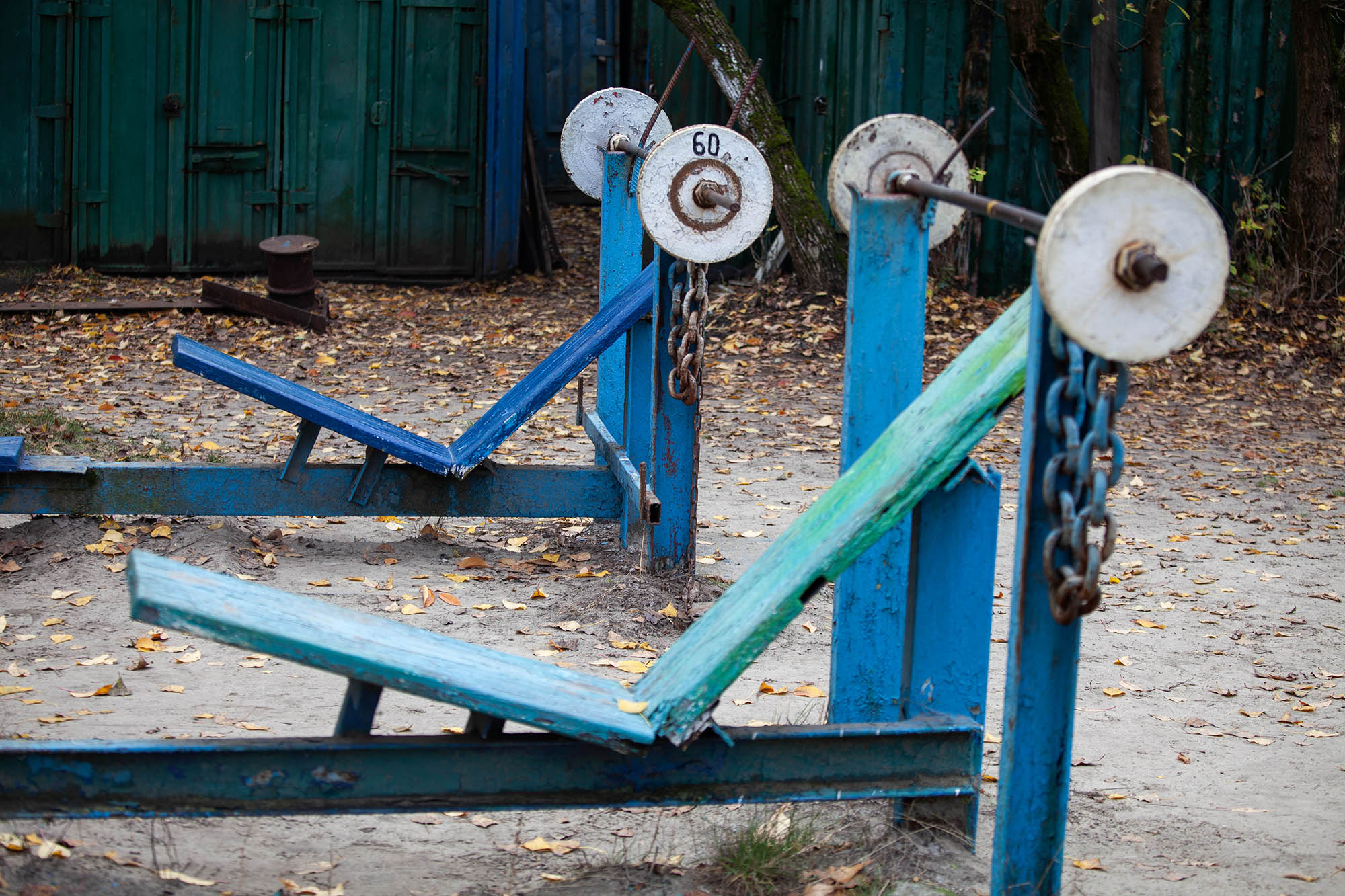
The weights at Kachalka don't look much like weights.
Some are thick white discs of metal, rust spreading out from the centre where they meet the bar. Heavy chains hang from the sides of benches painted blue and turquoise. The paint is chipped. Some of the padding has been repaired or replaced. Tyres sit between machines and fallen leaves collect on the bare ground beneath them.
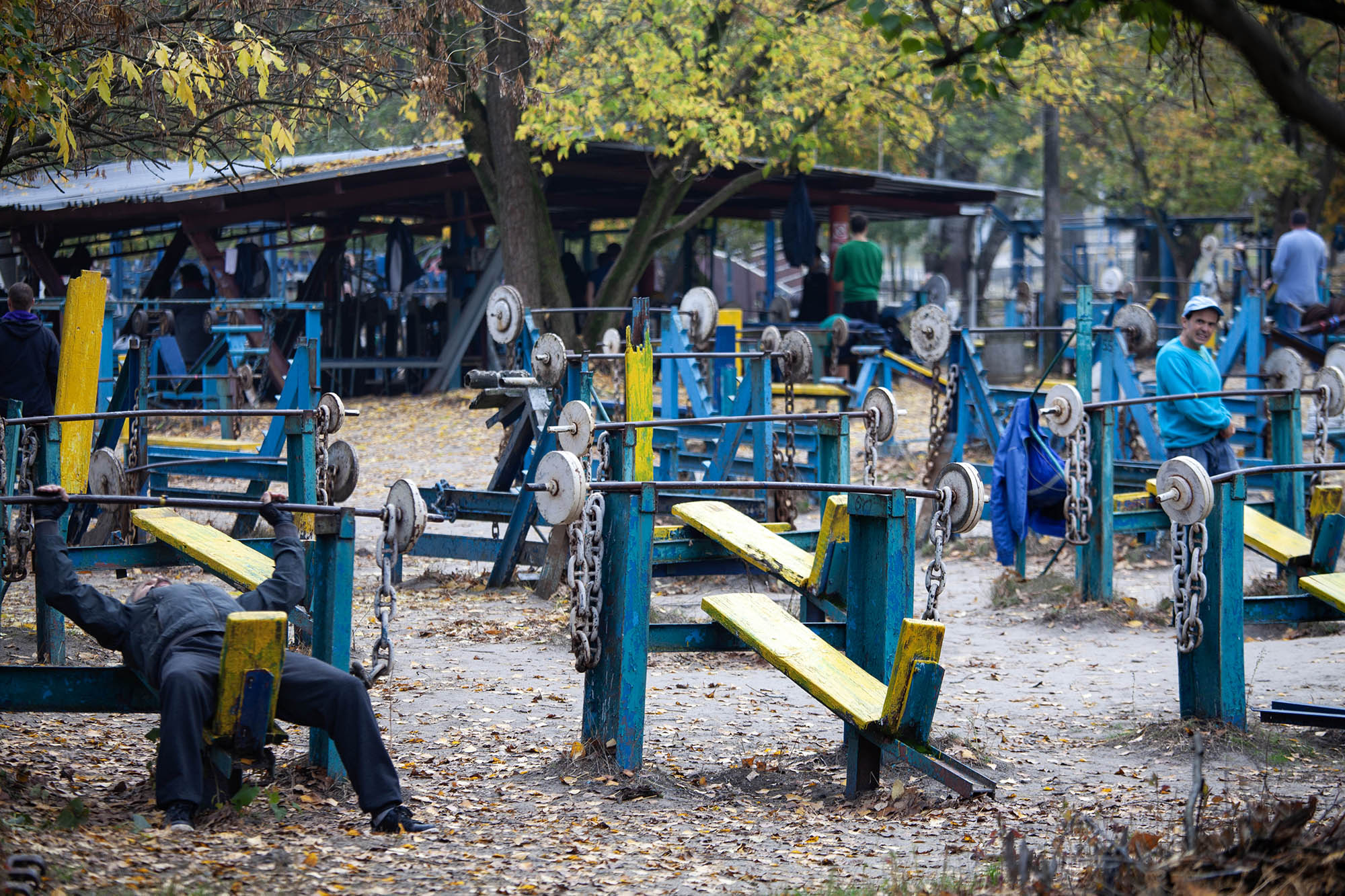
I was there on an autumn afternoon and the gym was busy.
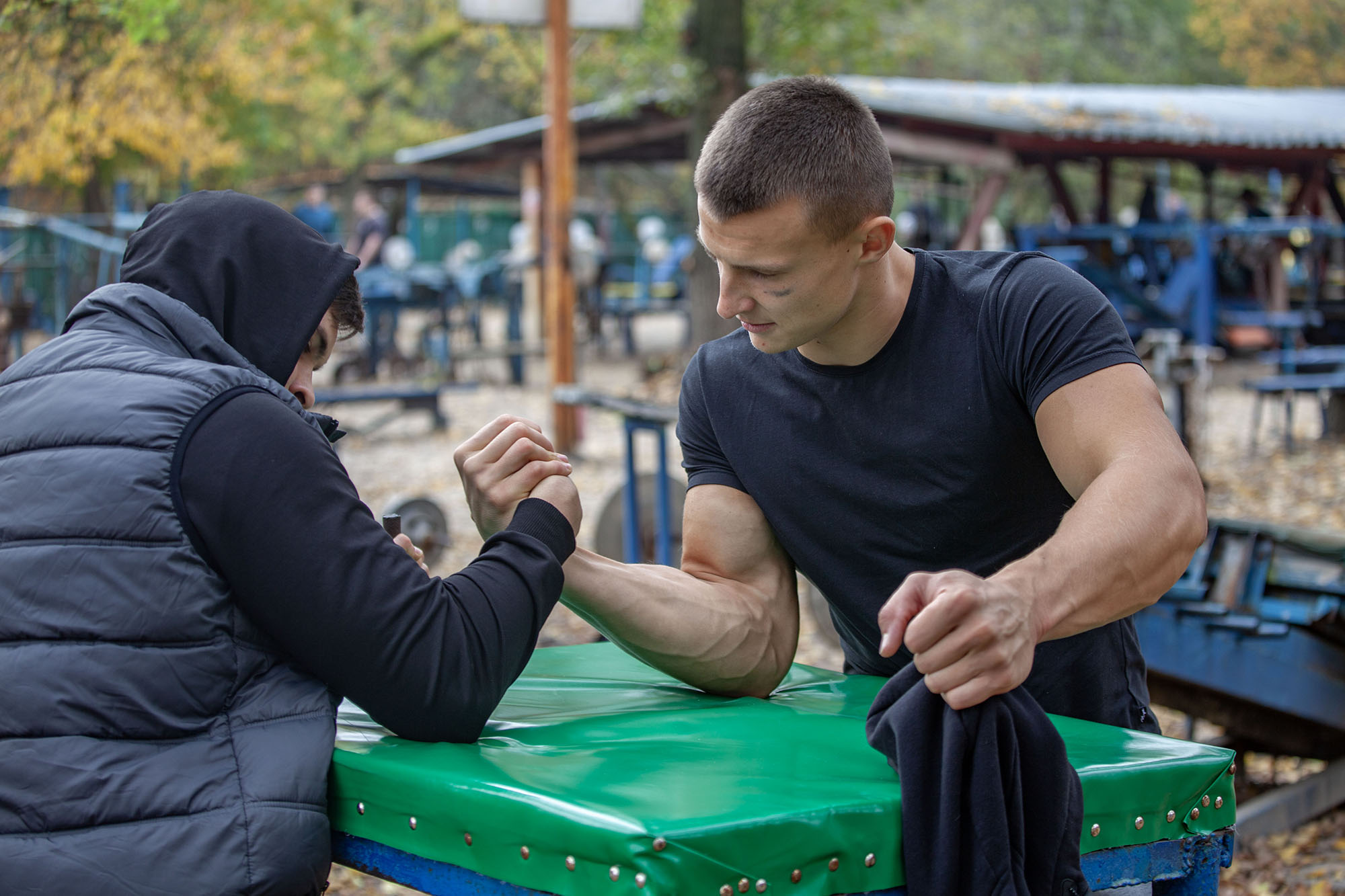
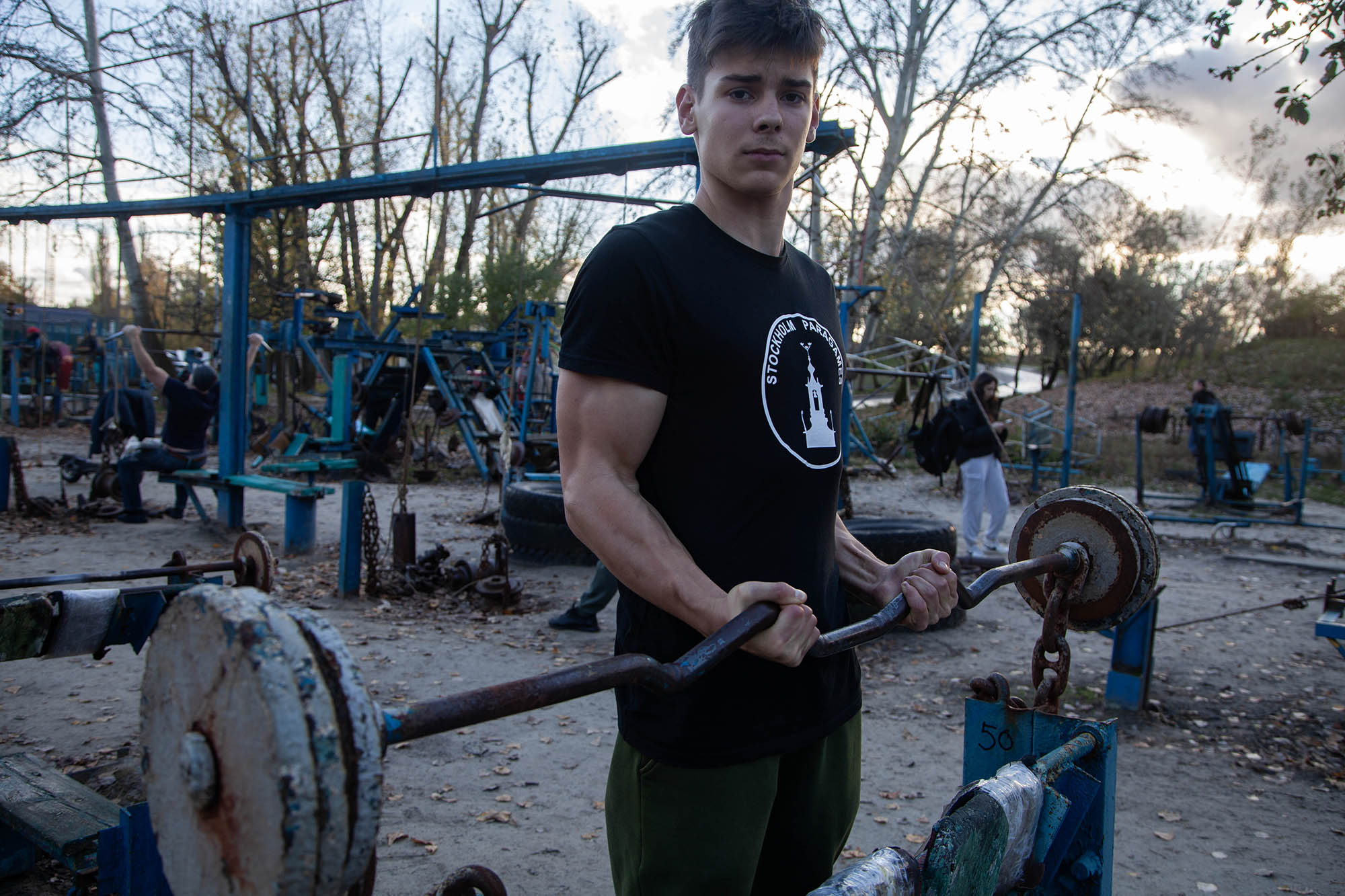
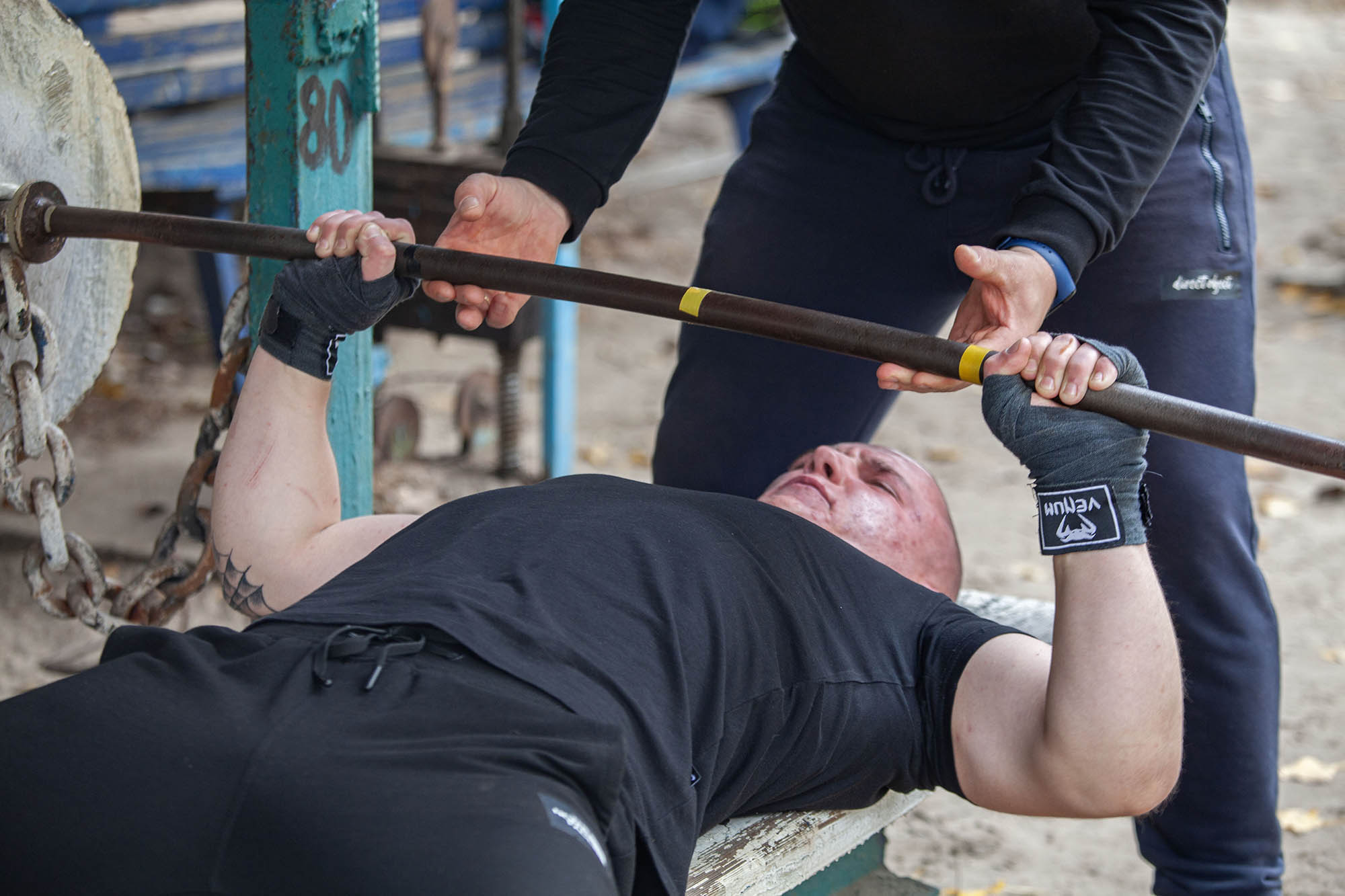
One man was bench pressing while another spotted him. Nearby, Artem, 17, was arm-wrestling a friend across a green table, while Roman, who was only 15, worked through bicep curls. Most of the people I saw training that day were men.
The gym sits among the trees in Kyiv's Hidropark, on the Dnipro River in Ukraine, and has been there in one form or another for more than half a century.
Hidropark itself opened in 1968 as a recreational area for Kyiv residents. Around the same period, what would become Kachalka began with something considerably simpler than the collection of machinery here today: a bar for doing chin-ups.
During the 1970s, when Ukraine was part of the Soviet Union, enthusiasts began building more equipment from whatever they could obtain. Co-founder Yuri Kuk, a mathematician who worked at a cybernetics research centre, later recalled that scrap metal was plentiful and factory workers could help turn it into exercise equipment.
Rails, vehicle parts, old radiators, tyres, wood and other discarded material became weights and machines. More than fifty years later, much of that homemade equipment is still part of the gym.
Kachalka is free to use.
I had gone there partly to photograph the gym but while walking around I started talking to some of the men training there. There was quite an age range. Roman was 15 and Artem 17; Vladymir was 50. Men trained alone and together, spotted each other and stood around talking between sets.
I asked the three of them why they came. Mostly, it was to train, get stronger or stay healthy.
“I am fascinated by the atmosphere of this gym, where people come to really engage in sports, not just to take Instagram photos,” said Artem.
An old-school gym
For Artem, the difference between Kachalka and a conventional gym was obvious.
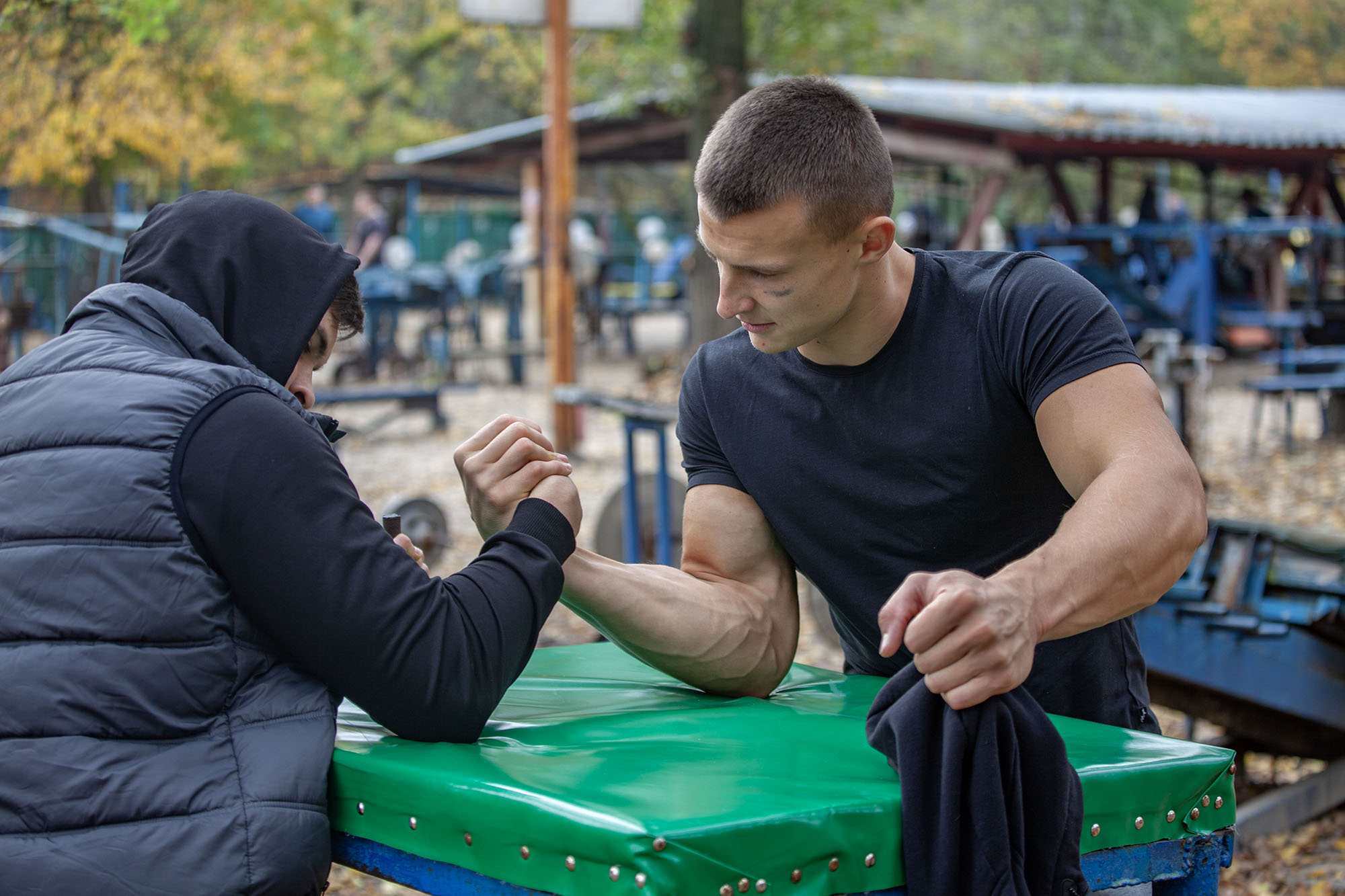
“The atmosphere in Hidropark is drastically different from other fitness clubs or gyms, as it feels like an atmosphere of unchanging ‘old school’ traditions, and the equipment there you won't find anywhere else in the world.”
I had asked him how Kachalka, with its raw and traditional atmosphere, shaped his view of masculinity. His answer was fairly direct.
“In this gym, all the men are masculine, as the equipment here, in my opinion, is not for the weak.”
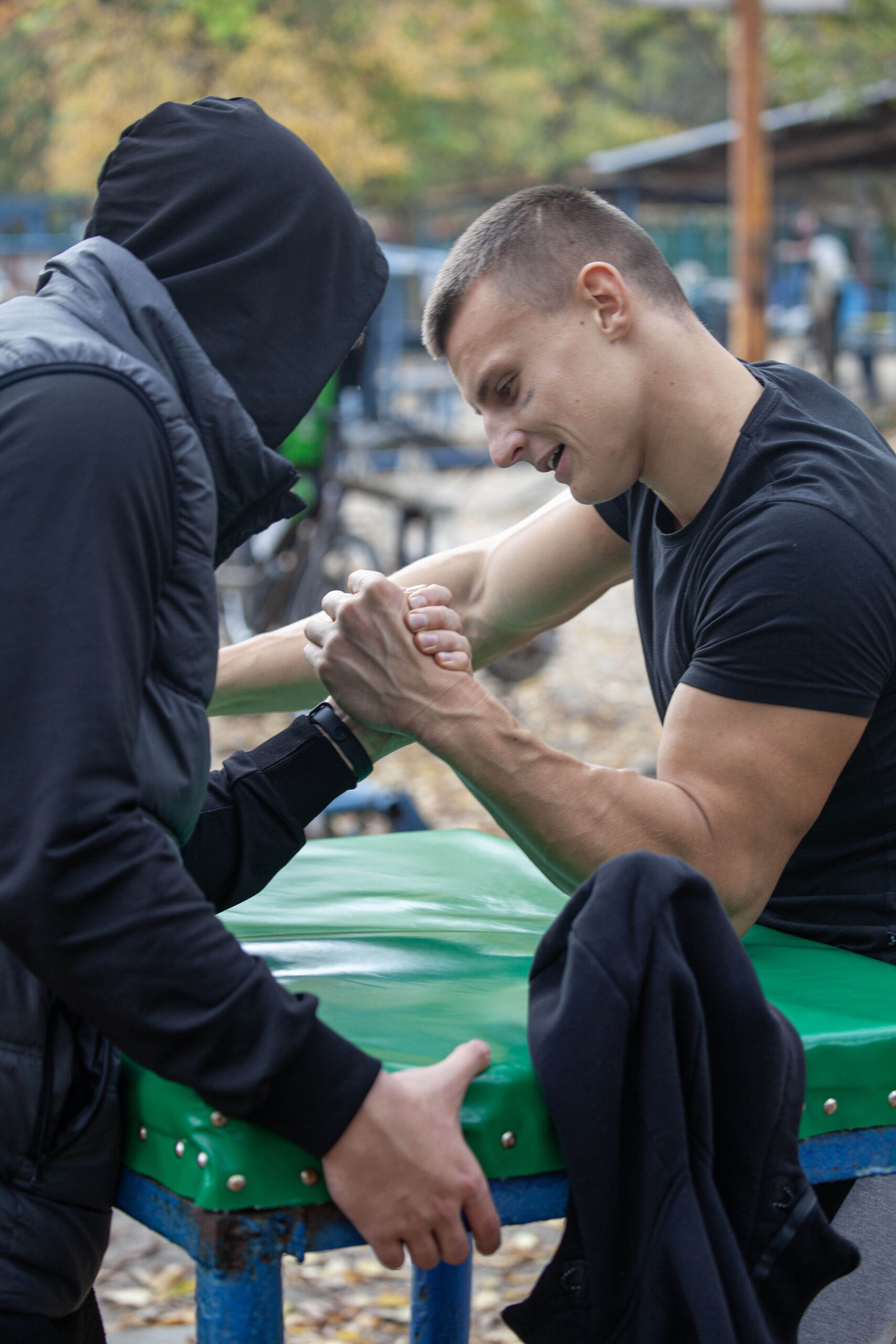
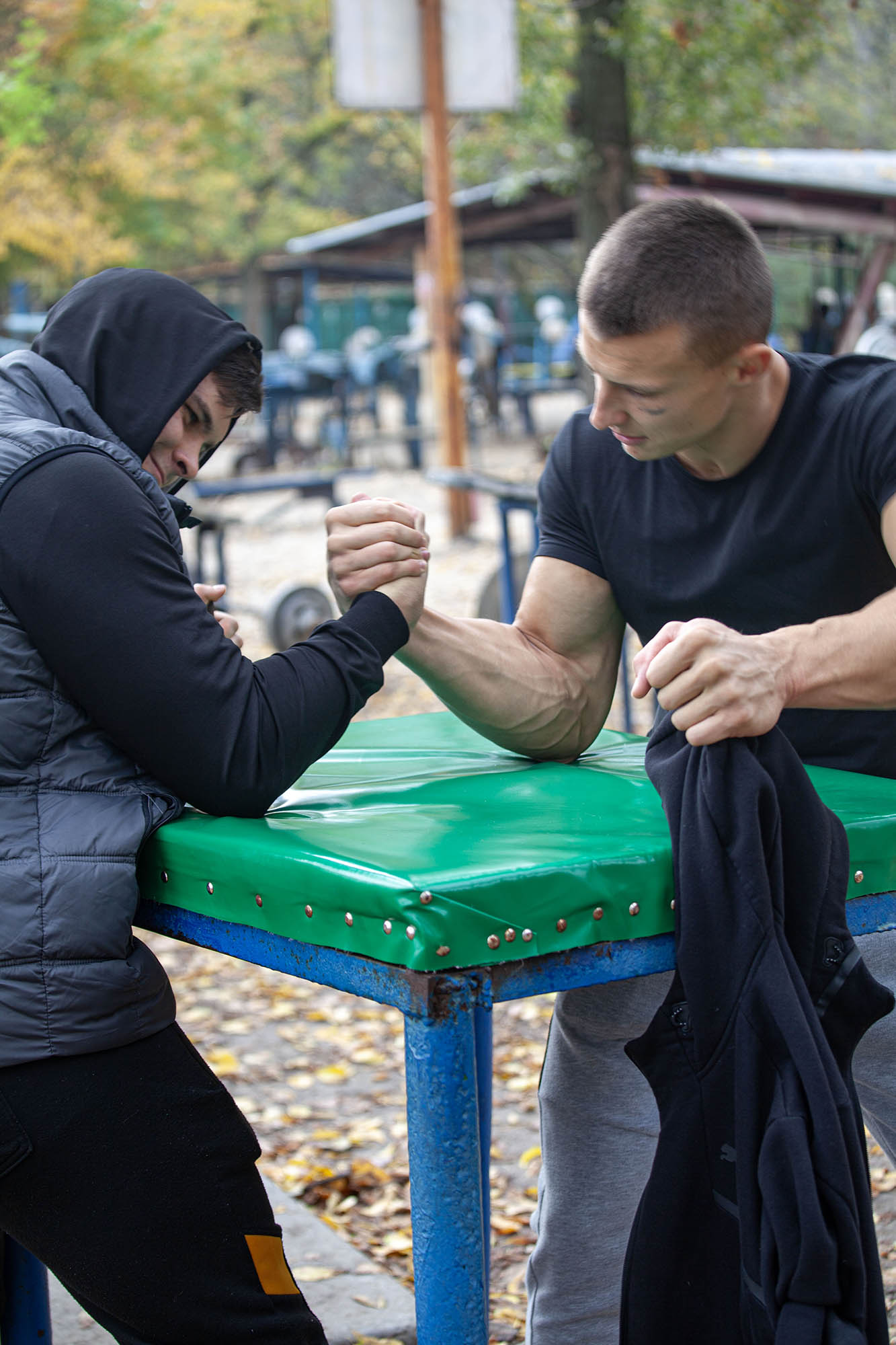
He also liked the competitive side of training there. When I met him, he was arm-wrestling another young man at one of the tables, something he specifically mentioned when I asked about the community around the gym.
“I really liked the atmosphere of a certain competition and mutual support and help, especially when it comes to arm wrestling in Hidropark.”
Around them, other men carried on training. There were no separate rooms or sections here: the arm-wrestling table, benches, weights and homemade machines were all scattered through the same open space among the trees.
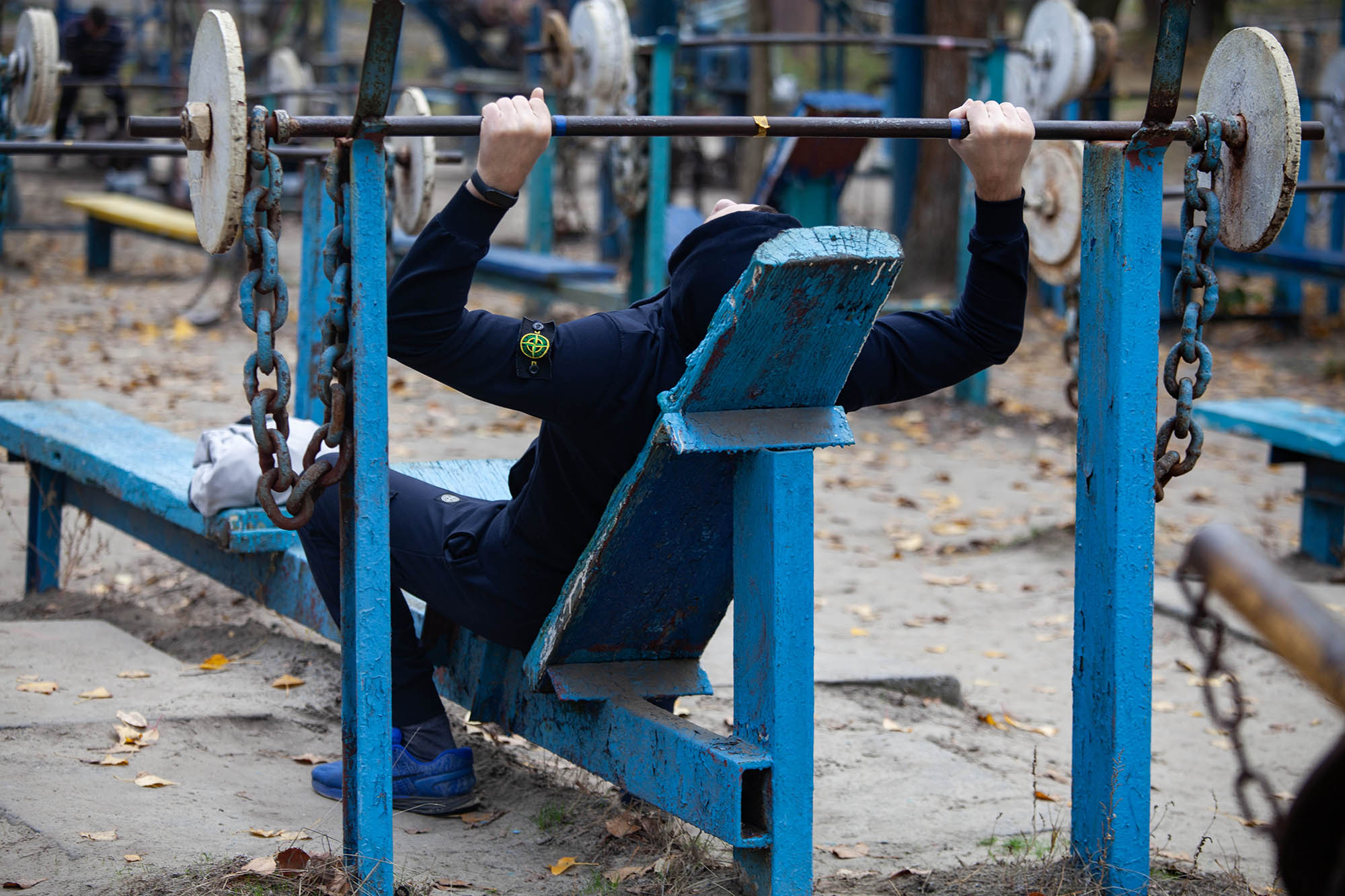
Training outside was part of the appeal too. Artem talked about people continuing to exercise there through Kyiv's changing seasons, “regardless of cold or heat, rain or snow.”
That afternoon the ground was already covered in autumn leaves, some of them gathering underneath the machines. There was nothing separating the gym from the weather beyond the trees overhead.
I also asked him how building strength affected other areas of his life.
“Engaging in sports, especially building strength, greatly boosts my confidence in myself and my abilities, which allows me to succeed in other areas of life.”
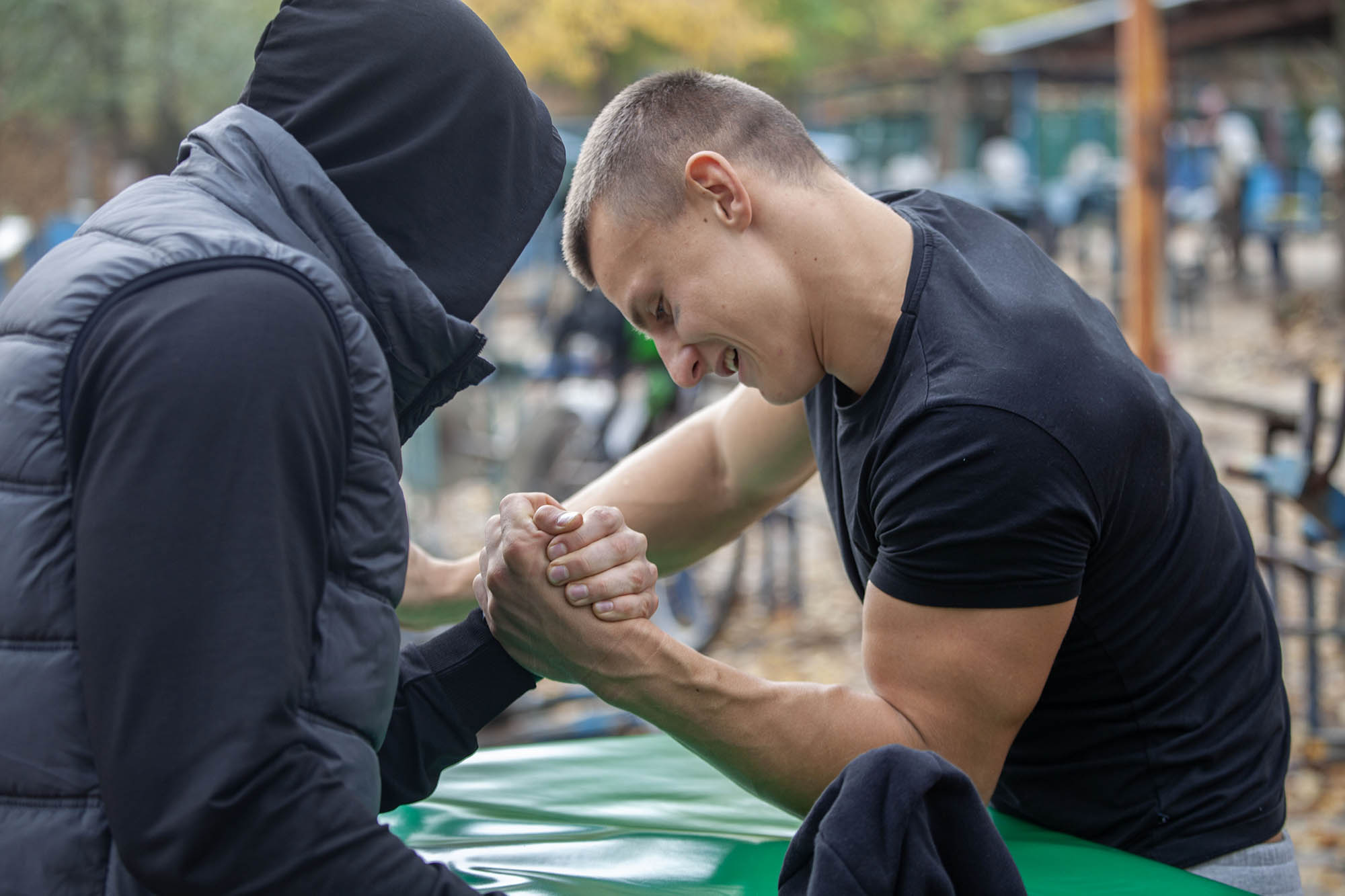
He planned to keep training and hoped to bring other people with him.
“I strive to continue developing in the field of fitness, inviting others here, sharing experience and learning from others. I believe the fitness field is developing very quickly and more and more people will engage in it.”
Five visits in
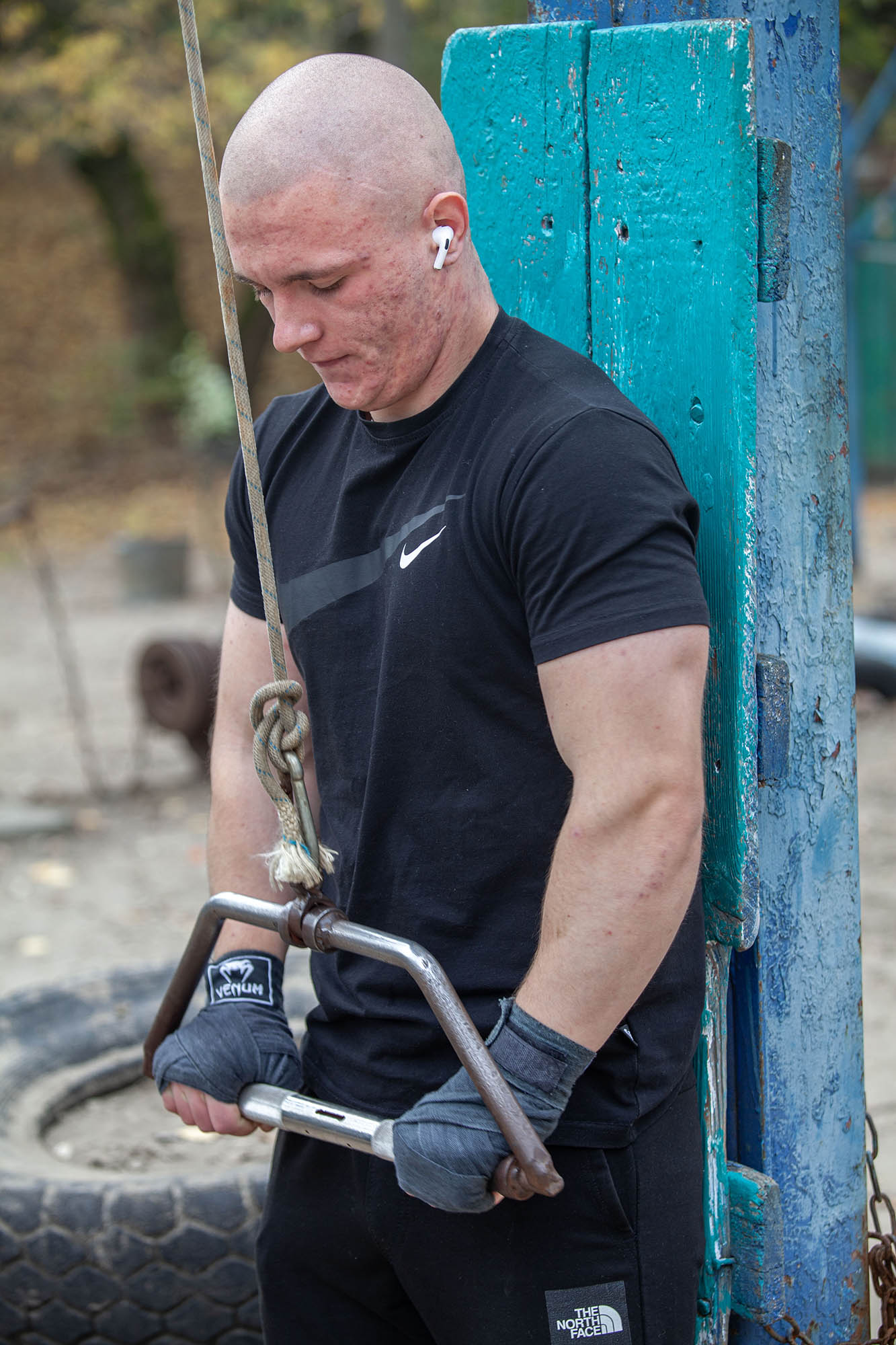
Roman was 15 and had only recently started coming to Kachalka. When I photographed him, he was working through bicep curls on one of the old machines.
He was already visibly muscular, particularly for someone so young. In the photograph, he is standing between the blue metal uprights of the machine, gripping a bar attached to the weights below.
A friend had introduced him to it the week before.
“This gym was recommended to me by my friend. He didn't have the funds for a private gym but he still needed rehabilitation. He invited me here to train. That was last week. Now I'm already here. I'm training for the fifth time. I really like it here.”
Despite having been there only a few times, Roman already had an impression of the atmosphere.
“The atmosphere is actually very friendly and all the people here are polite; everyone helps with training.”
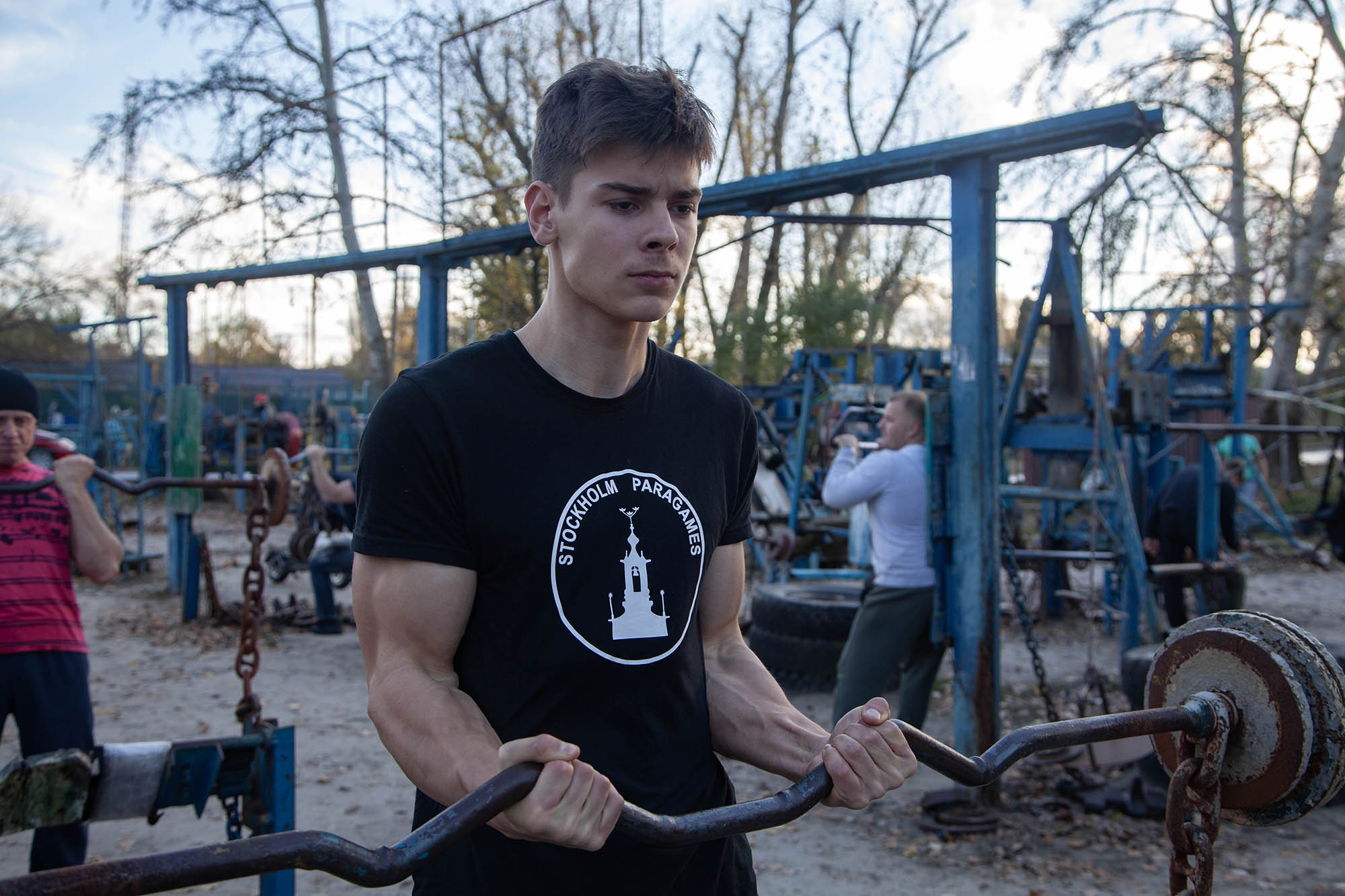
It was something I could see happening around him. Men spotted each other on the benches, stood talking between sets and watched while other people trained. The age differences didn't seem to matter much.
When I asked how Kachalka compared with other gyms, Roman returned to the amount of interaction between people.
“In private gyms, the atmosphere is usually not as friendly, there is less communication. And, in my opinion, it's much more convenient here. The team.”
He had been training for about a year by then. When I asked about building strength and what it meant for him beyond the gym, his answer was simple.
“I train in order to become stronger and not have harmful habits. And in our time, this is a pretty serious path. I've taken it up.”
At Kachalka, he was surrounded by people considerably older than him. That seemed normal here. Roman described seeing people “from young to old” using the gym, with health as the common reason for being there.
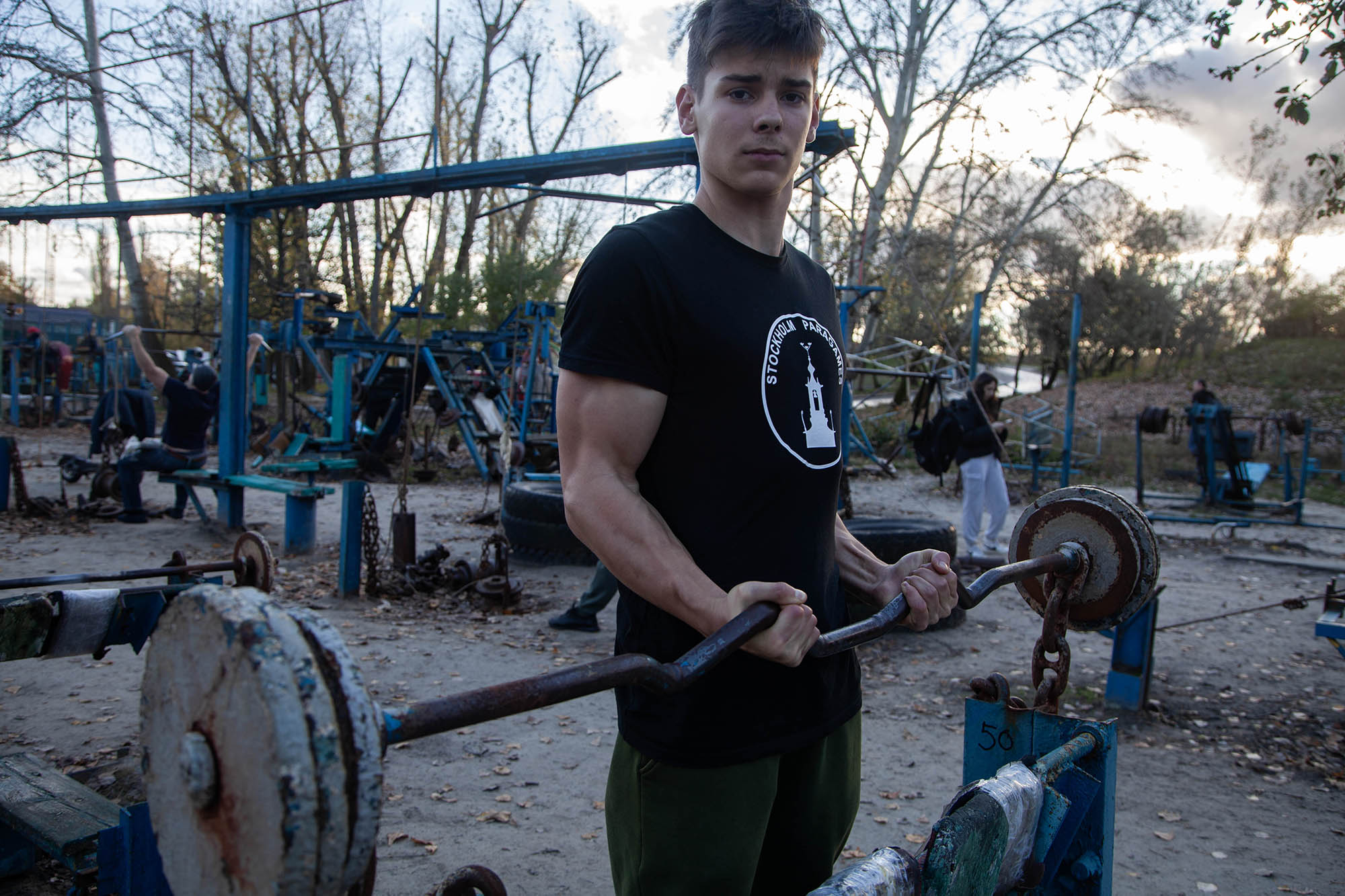
“I've been training for a year to be healthy and happy. I really like it. I hope it continues.”
Training in the open air
Vladymir was 50. When I photographed him, he was lying face down across one of Kachalka's homemade machines, dressed in black and working his legs against a padded metal lever. The chipped blue-and-green frame around him looked as improvised as much of the equipment elsewhere in the gym.
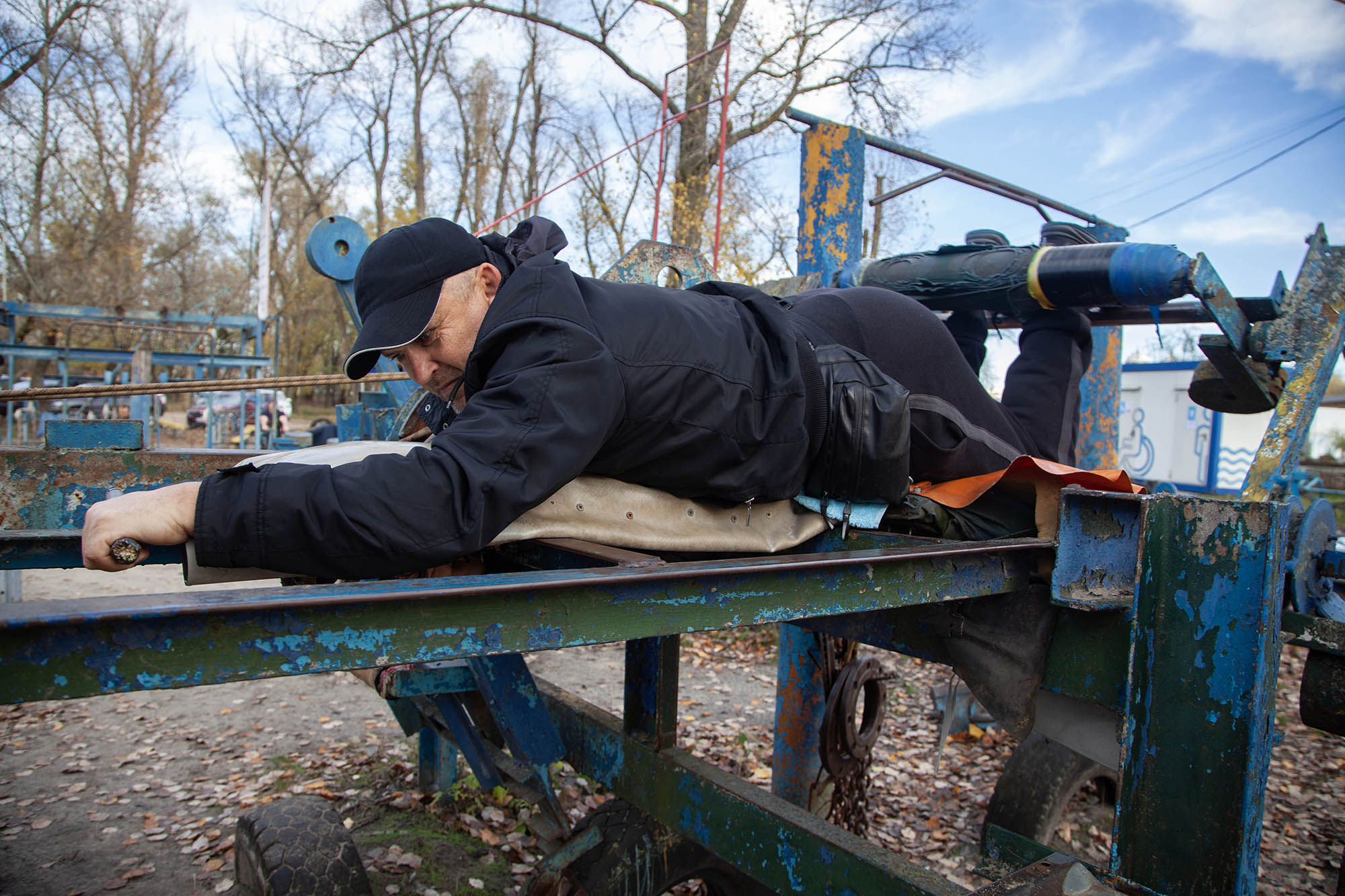
For him, being outdoors was part of what made the gym appealing. He could come at different times of the day, train in the fresh air and use a place that still had what he described as a “raw and traditional atmosphere.”
The weather didn't seem particularly important to him either.
“For people who train in the open space, there is no difference whether the weather is raw or humid. People of different age groups train here at any time, be it summer, autumn or winter.”
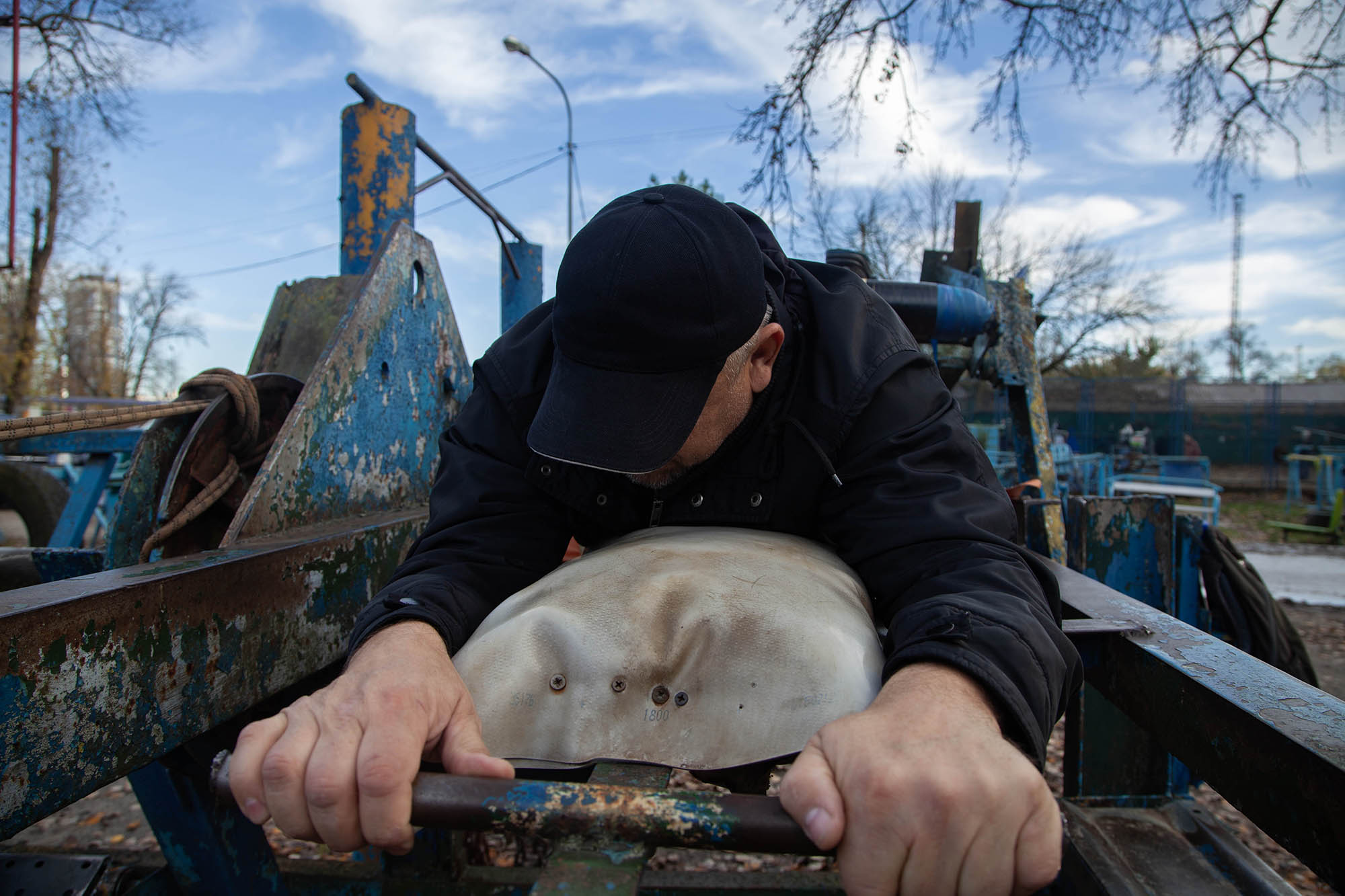
Kachalka wasn't somewhere he came only to exercise. When I asked about the community around the gym, Vladymir talked about different kinds of people training there, spending time together, meeting others and gaining experience from them.
There was also the possibility of doing very little.
He described coming to Kachalka to relax, walk around or simply watch other people train. Sometimes that meant bringing tea or coffee and resting there between the equipment and the trees.
His own reason for training was straightforward. He wasn't trying to transform his body or turn strength into something larger.
“I only train to maintain my physical strength and no more.”
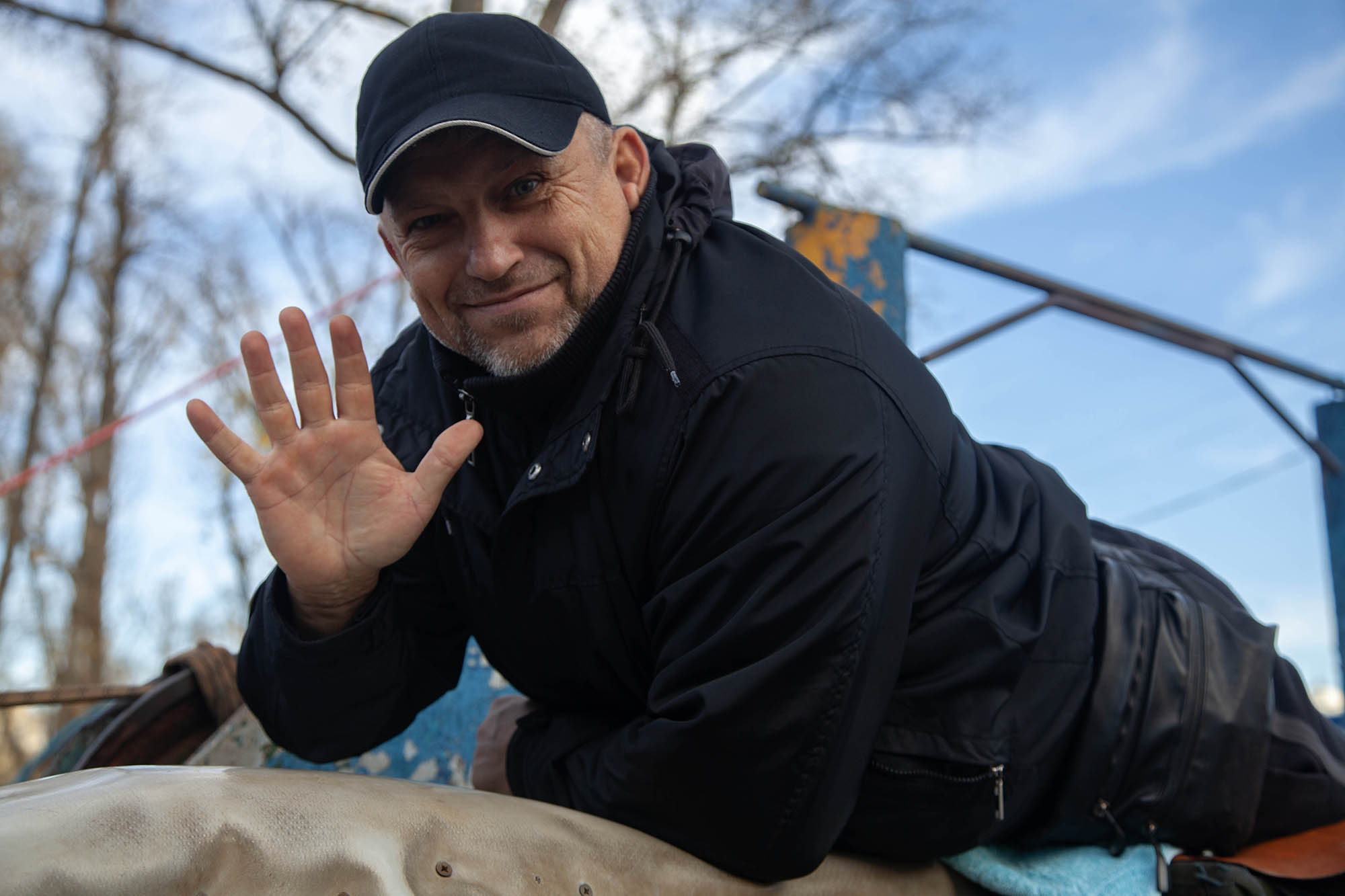
For Vladymir, that was enough. Training outside, he said, was “great for health.”
More than somewhere to train
Kachalka was also somewhere people seemed comfortable spending time without constantly exercising. Between the machines, men stopped to talk, watched other people train or waited while someone else finished a set.
Vladymir mentioned this when I asked him about the effect the place had beyond the physical benefits of training.
None of this required anyone to come to Kachalka specifically to socialise. Training gave them something to do alongside other people and conversation happened around it.
The mix of ages was noticeable. Roman and Artem were still teenagers, while Vladymir was 50, and there were other men of different ages moving through the equipment around them. Vladymir said this continued throughout the year.
There was no membership desk or organised group bringing them together. People arrived at a public park and used the same collection of old machines. Some trained alone. Others needed someone to spot them. Artem found someone to arm-wrestle. Roman had been brought there by a friend.
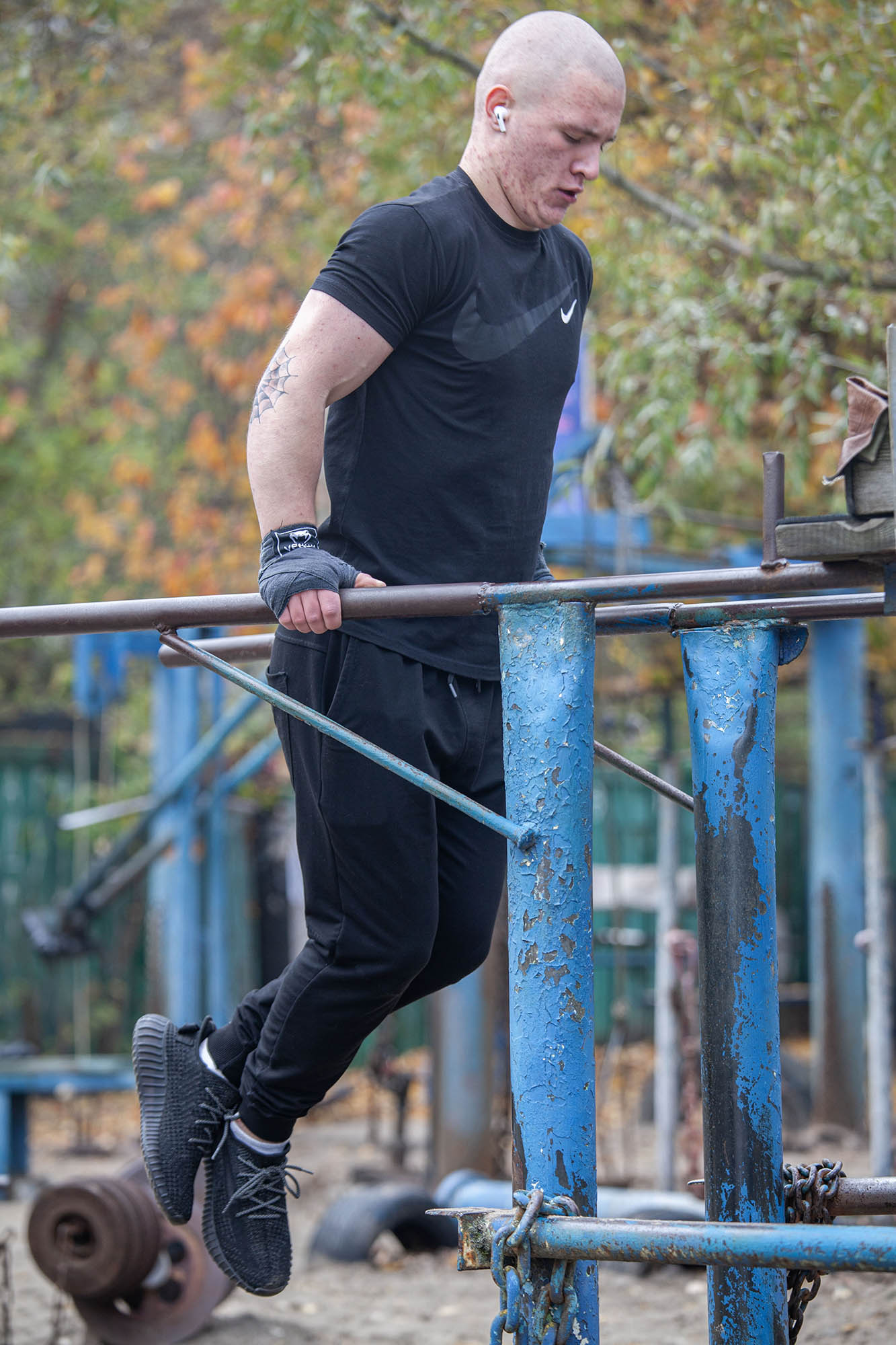
For a gym assembled from scrap metal more than half a century ago, that everyday use was perhaps the most striking thing about it. Kachalka hadn't become an exhibit or a relic of Soviet Kyiv. People were still turning up and training on it.
Still being used
For all its history, Kachalka didn't feel much like a historical site.
The equipment was old but the people using it weren't treating it as a curiosity. Men loaded plates onto bars, moved between machines and helped each other with lifts.
Kachalka isn't a men's gym. Anyone can use it. But on the afternoon I spent there, almost everyone training was male. There was no sign announcing it as a space for men and no need for one. Men had simply gathered there around something they wanted to do.
The three men I spoke to were at very different stages of their lives. Artem liked its old-school atmosphere and the confidence he got from becoming stronger. Roman wanted to be healthy, get stronger and stay away from harmful habits. Vladymir was content to maintain his physical strength.
The equipment around them had been assembled decades before any of them started training there.
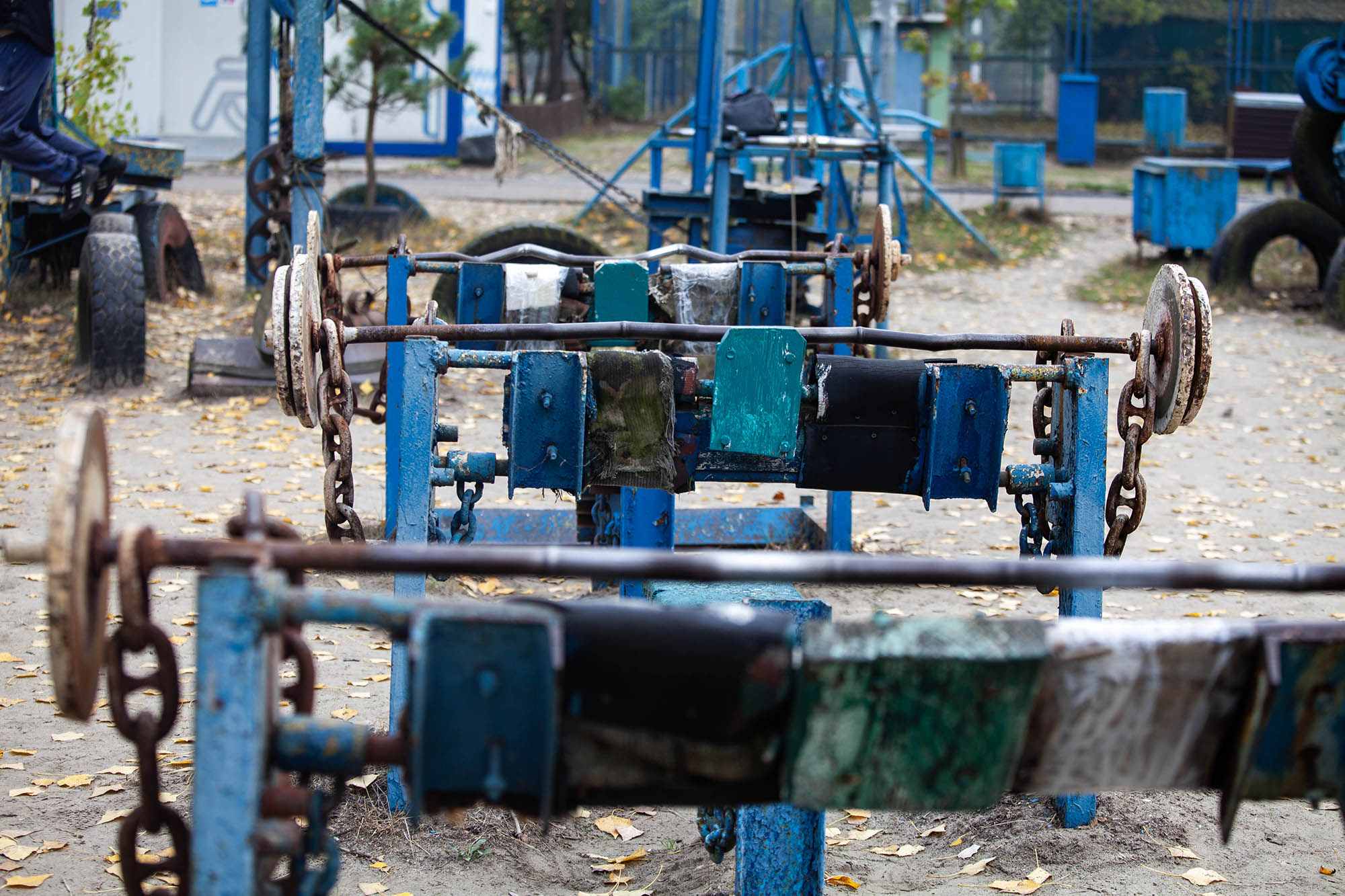
It was still doing its job.
Essentially Man documents how men live, not how they should.